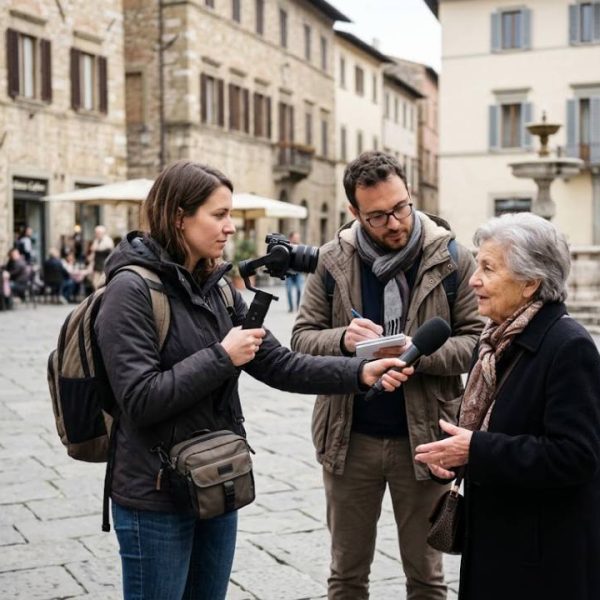
In a fast-paced newsroom or on a bustling production set, one professional is often expected to juggle multiple responsibilities at once. From gathering facts and shaping the story to preparing it for global audiences on multiple platforms, the modern media specialist must deliver flawless results under intense time pressure. Any mistake can damage credibility, delay release schedules, or cause audiences to disengage, so mastering each responsibility is critical.
1. The Investigator: Digging for the Story Behind the Story
At the core of every great media piece is solid investigation. Whether it is a breaking news bulletin, a documentary, a corporate interview, or branded content, the investigative role ensures that every detail is accurate and supported by evidence. This means more than simply confirming names, dates, and places. It involves checking data sources, verifying quotes, comparing official statements with eyewitness accounts, and identifying inconsistencies that could undermine the final narrative.
Strong investigation also anticipates audience questions: What is new here? Why does it matter now? How does it impact people’s daily lives? By answering these questions during research, the professional reduces the risk of errors or gaps that might later require costly corrections, re-shoots, or legal clarifications. In a competitive media landscape, the investigator’s precision is the first defense against misinformation and reputational damage.
2. The Script Architect: Turning Facts into a Compelling Narrative
Once the facts are in place, the next responsibility is to transform raw information into a clear, engaging script. This script might support a TV segment, a web series, a training video, or a social media feature. In every case, structure matters. The professional must decide what to include, what to omit, and how to guide the viewer from the opening hook to the closing message without confusion or fatigue.
The script architect carefully balances storytelling and clarity. Complex topics are broken down into digestible segments, technical terms are explained for non-expert viewers, and the pacing is adjusted to keep attention high. This planning stage is also where visual cues, graphics, and sound elements are anticipated. A well-structured script eliminates redundancy and helps editors, voice-over artists, and translators work efficiently, reducing the chance of misinterpretations later in the production workflow.
3. The On-Screen Communicator: Delivering with Clarity and Presence
Whether in front of a camera, behind a microphone, or presenting in a live stream, the same professional often becomes the face and voice of the project. This role demands clarity of speech, confident posture, and emotional control, even when the topic is complex or sensitive. The communicator must maintain audience trust, convey urgency or calm when needed, and project authority without sounding rehearsed or artificial.
On-screen communication is not only about speaking well; it is about adapting delivery to the channel. A long-form documentary may require a steady, measured tone, while a short social clip demands energetic and concise performance. Every pause, emphasis, and expression shapes how the message is received. Audiences make quick judgments about credibility, so mastering this role minimizes the risk that the content will be dismissed or misunderstood, no matter how strong the underlying research may be.
4. The Global Adapter: Making Content Accessible Across Languages and Cultures
Media rarely stays within one language market anymore. The same video might be watched by viewers in dozens of countries within hours of release. That makes language adaptation a mission-critical responsibility. The professional overseeing this stage must ensure that dialogue, on-screen text, graphics, and cultural references are properly localized, so foreign-language audiences receive the same message, tone, and nuance as the original viewers.
High-quality localization often depends on expert partners who specialize in translation and timing for video. This is where professional subtitling services become essential. They synchronize text with speech, preserve the speaker’s intent, and respect reading-speed limits so that viewers can effortlessly follow the content. Skipping this level of precision can lead to mistranslations, offensive phrasing, or confusing subtitles that break immersion and harm the brand’s image.
Five roles and no margin for error is a fair description of a modern newsroom and of most small marketing teams. Something always gets dropped, and it is usually outreach, because it is the task with the slowest feedback loop. Handing that piece to guest posting services is less about volume than about making sure it happens at all.
5. The Quality Guardian: Reviewing Every Frame Before Release
Even when research, scripting, performance, and localization are handled well, the final responsibility is quality assurance. In this role, the same professional (often together with a small team) must conduct a meticulous review of the finished piece. They check for visual continuity, audio clarity, correct spelling on graphics, consistent terminology, accurate captions, and alignment with editorial or brand guidelines.
The quality guardian watches for anything that could confuse viewers or weaken trust: jump cuts, mismatched b-roll, misaligned graphics, or audio that drifts out of sync. They also verify that legal disclaimers, credits, and rights attributions are present and correct. This step is the last barrier preventing small oversights from becoming public errors. Once a video or report is live on multiple platforms, fixing mistakes can be time-consuming and, in some cases, impossible without reputational cost.
Bringing All Roles Together Under Pressure
The modern media professional often performs all these roles on tight deadlines, with limited budgets and high expectations for speed and quality. They must be an investigator, a script architect, an on-screen communicator, a global adapter, and a quality guardian, sometimes in a single hectic day. Each responsibility supports the others: weak research undermines the script, poor performance diminishes strong writing, and inadequate localization or quality control can negate all the effort invested earlier in the process.
Navigating these overlapping roles successfully requires a combination of discipline, technical skills, linguistic awareness, and attention to detail. Those who manage to deliver consistently under these conditions become invaluable assets in newsrooms, production companies, agencies, and corporate communication teams. They understand that audiences have little patience for errors and that trust, once lost, is difficult to regain.
By recognizing and respecting each of these responsibilities, professionals can create media that is accurate, engaging, culturally sensitive, and technically polished from the first frame to the last. In a world where every piece of content can reach a global audience instantly, there is no room for carelessness at any stage of production.